
You can make a room feel warm and grounded by adding a rustic mirror that reflects light and brings texture. Place it where people pass by or where natural light hits, and you'll notice the space looks larger and more inviting.
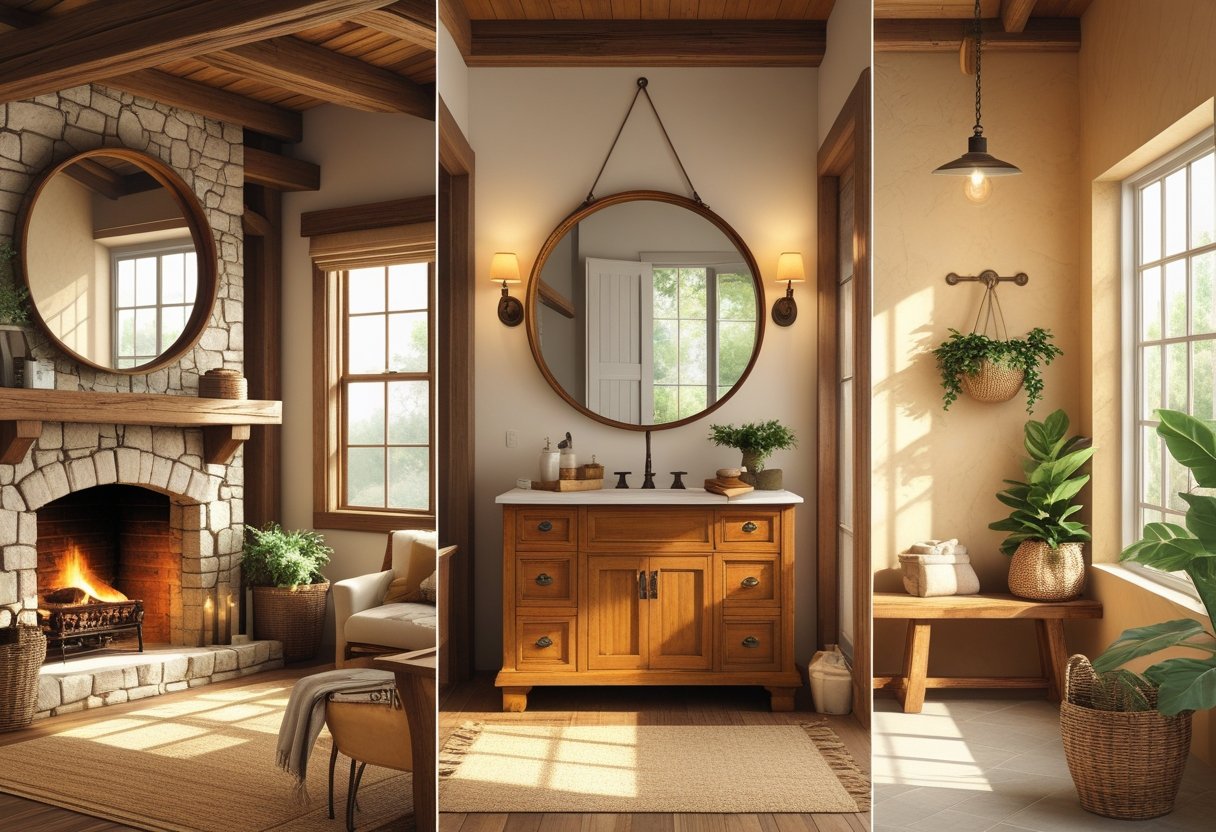
A rustic mirror works best in your entryway, living room, or bedroom because it adds character, warmth, and practical light without overwhelming the space. Think about pairing it with natural materials like wood, metal, or woven accents to keep a simple, cozy look that fits many styles.
Use the mirror to create a focal point, bounce light into darker corners, or add depth above a console or dresser. Small changes, like the right placement and a few matching accessories, will make the mirror feel like a deliberate design choice.
Key Takeaways
- A rustic mirror adds warmth, texture, and reflected light to a space.
- Place it where it can act as a focal point or brighten dark corners.
- Pair it with natural accents for a cohesive, inviting look.
Why a Rustic Mirror Transforms Any Space
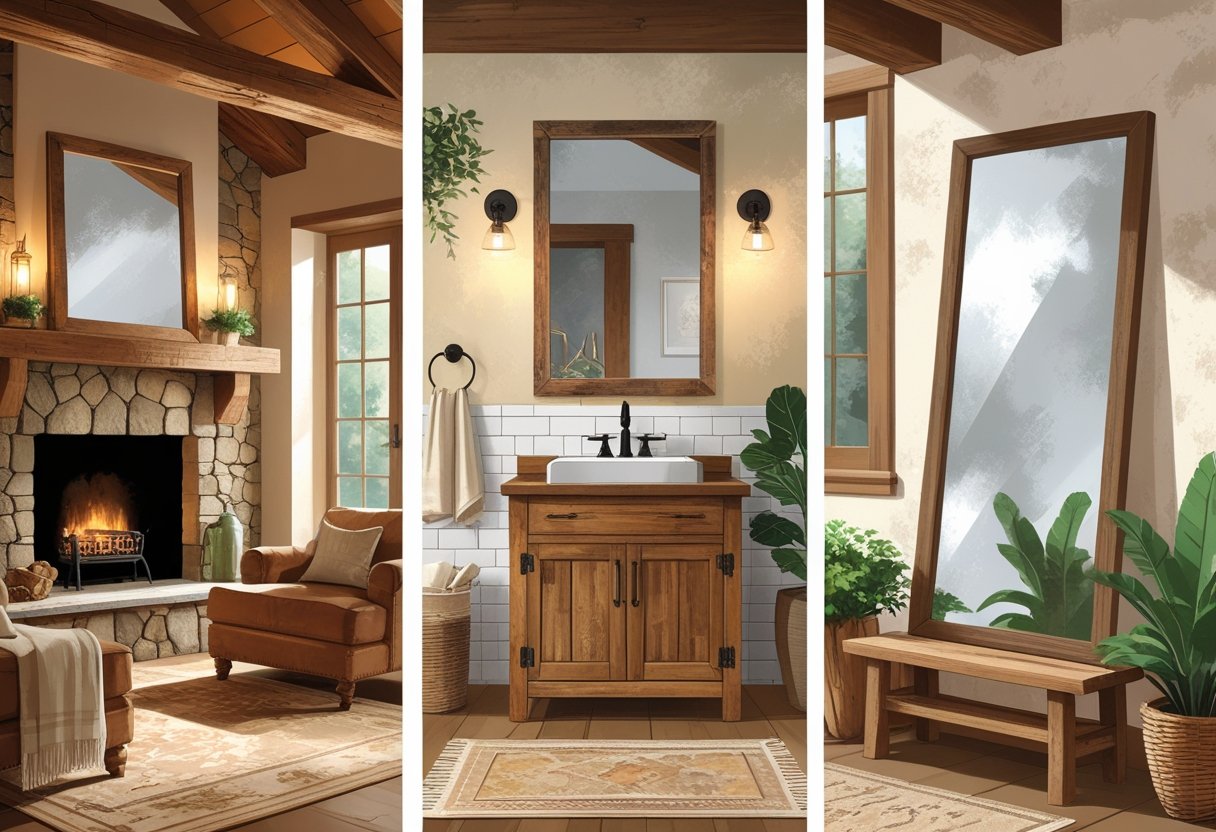
A rustic mirror brightens rooms, adds texture, and draws attention to key spots. It works in small bathrooms, wide entryways, and cozy living rooms by changing light, feel, and focus.
Enhancing Natural Light
A rustic mirror reflects daylight into darker corners. Place a mirror opposite or adjacent to a window to bounce sunlight across the room. This simple move can make a narrow hallway feel wider and a dim kitchen look more inviting.
Choose a mirror with a distressed wood frame rather than a heavy metal one; the wood's warm tones help the reflected light feel softer. If you have only one window, angle the mirror slightly to catch the most sun during midday. In rooms with multiple light sources, use the mirror to balance the brightness so shadows are reduced.
Adding Texture and Warmth
Rustic frames bring tactile detail that flat walls lack. Rough-hewn wood, visible grain, and hand-forged accents add depth without cluttering the space. These textures pair well with linen curtains, woven rugs, and natural fiber baskets.
Pick a frame finish that matches your flooring or furniture to create cohesion. For cold spaces with tile or concrete, a reclaimed wood frame instantly softens the look. You can layer a small mirror above a wooden console to create a stacked-texture effect that feels intentional and homey.
Creating Focal Points
A rustic mirror anchors a room and gives your eye a place to rest. Hang a large mirror above a fireplace, console, or bed to define that area as the main visual focus. The mirror’s scale should match the furniture; a mirror too small looks lost, and one too large overwhelms.
Use the mirror to highlight artwork or a vase by positioning it so those items appear in the reflection. In open-plan spaces, a mirror can separate zones visually—place it behind a dining table to make the eating area stand out.
Entryway Charm: Making a Striking First Impression
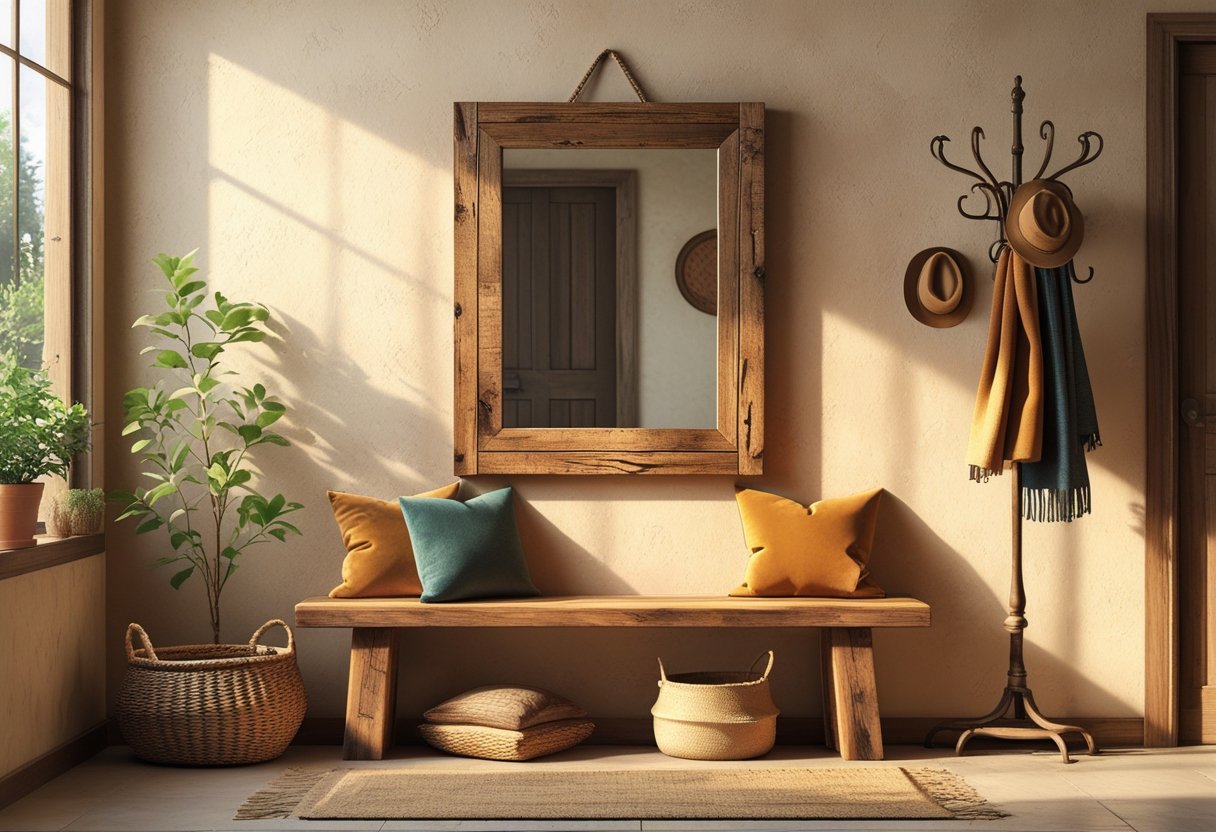
A rustic mirror can set the tone for your home by adding texture, warmth, and a focal point. Place it so it balances furniture, picks up light, and complements the materials and colors already in your entry.
Pairing with Console Tables
Choose a console table that matches the mirror’s scale and finish. If your mirror is large and heavy, use a wide, sturdy table—at least two-thirds the mirror’s width—to keep the look grounded. For a small round mirror, a narrow table 24–30 inches wide works well.
Match materials to tie the pair together. Use wood with similar tones or contrast reclaimed wood with a metal-legged table for a layered look. Keep tabletop items minimal: a low tray for keys, one lamp, and a small plant prevent clutter and keep the mirror visible.
Anchor the arrangement with eye-level placement. Hang the mirror so its center sits about 60–65 inches from the floor. This height aligns with most sightlines and works whether you’re seated at the table to put on shoes or standing at the door.
Complementing Vintage Decor
Let the mirror echo vintage details rather than compete with them. If your entry has an antique coat rack or a distressed chest, pick a mirror with a simple reclaimed wood frame or gentle tooling in the wood grain. Avoid overly ornate frames that clash with modest vintage pieces.
Blend colors carefully. Pull a color from existing vintage items—faded navy, olive, or mustard—and use it in a small accent like a runner or cushion to link the mirror to the room. Keep patterns subtle so the mirror’s texture remains the main feature.
Add a few curated vintage accents nearby. A single brass candlestick, a worn leather tray, or a framed sepia photo enhances the period feel. Limit the number of items to three or fewer to keep the entry calm and readable.
Reflecting Ambient Lighting
Use the mirror to capture and spread available light. Position it opposite or adjacent to a window to double daylight. Even small windows gain impact when a rustic mirror reflects their light into the hallway.
Work with artificial light too. Place a wall sconce or table lamp near the mirror so the frame catches warm light in the evening. Aim for bulbs rated 2700K–3000K to keep tones warm and natural.
Mind glare and sightlines. Tilt the mirror slightly if it would reflect a bright bulb into visitors’ eyes. Check reflections from the street or porch; you want welcoming light, not distracting mirrors of traffic or clutter.
Rustic Mirrors in the Living Room
Rustic mirrors add texture, light, and a focal point. You can use them above a fireplace, inside a gallery wall, or paired with modern pieces to tie the room together.
Positioning Above Fireplaces
Place the mirror so its bottom edge sits 6–12 inches above the mantel. This keeps the mirror proportional to the fireplace and prevents a top-heavy look. Measure the mantel width first; choose a mirror about two-thirds to three-quarters of that width for balanced scale.
Center the mirror over the fireplace to create a clear focal point. If your mantel holds decor, angle the mirror slightly forward so reflections don't clash with objects. For tall ceilings, pick a vertically oriented mirror to fill space without crowding the mantel.
Use sturdy hanging hardware rated for at least twice the mirror’s weight. If the frame is heavy reclaimed wood, anchor into studs. For brick or stone surrounds, use masonry anchors to secure the mirror safely.
Accentuating Gallery Walls
Start with the mirror as the anchor piece, then arrange framed photos and art around it. Set the mirror at eye level so reflections complement nearby artwork. Keep 2–3 inch spacing between pieces for a tidy layout.
Mix frame textures—wood, metal, and painted frames—so the rustic mirror ties different styles together. Use a layout on the floor first to test spacing and alignment. Include one or two small shelves or sconces to add depth and break up flat surfaces.
Balance colors by repeating a tonal accent from the mirror frame across the gallery. For example, echo a warm brown frame with wooden frames or a woven basket. This creates cohesion without making the wall look matchy-matchy.
Blending with Modern Decor
Pair a distressed wood mirror with a sleek metal sofa table to create contrast. Keep surrounding furniture lines simple so the mirror stands out without clashing. Use neutral upholstery—gray, cream, or navy—to let the mirror’s texture be the room’s statement.
Use lighting to bridge styles: a slim modern floor lamp next to a rustic mirror softens the transition. Add one or two modern accessories like a ceramic vase or geometric tray to repeat clean shapes. This balances the aged look with fresh, contemporary elements.
If your room has glossy surfaces, choose a mirror with matte finishes to prevent visual competition. Tie the design together by repeating one material—such as iron or reclaimed wood—in a lamp base or coffee table leg.
Bedroom Retreat: Elevating Tranquil Style
A rustic mirror can become a focal point that adds warmth, texture, and function. Use it to define a bed area or to make a small reading nook feel larger and more inviting.
Using As a Headboard Feature
Mount a large rustic mirror horizontally above your bed to mimic a headboard's width. Choose a frame with weathered wood or iron that matches your nightstands. Hang it 4–6 inches above the mattress top so it reads as part of the bed, not floating too high.
Balance the mirror with low-profile lighting. Wall sconces or small pendant lights on each side keep sight lines clear and reflect soft light across the room. Add layered textiles—linen shams, a wool throw, and neutral pillows—to soften the frame and link the mirror to the bed.
Keep the mirror clean and streak-free; dust the frame weekly and wipe the glass with a microfiber cloth. If your ceiling is low, use a mirror with a slim frame to avoid overpowering the space.
Creating Cozy Reading Corners
Place a tall rustic mirror behind or beside a small armchair to visually expand a corner and bounce light toward your chair. Angle the mirror slightly to reflect a window or lamp, increasing daylight or lamp glow without extra fixtures.
Pair the mirror with a narrow side table and a floor lamp that has warm, dimmable light. This combo creates a clear, comfortable reading triangle: chair, light, and surface for your book and mug. Choose a chair with a low back so the mirror can reflect both you and the room.
Decorate the mirror's frame with a simple element like a single woven basket on the floor or a small potted plant on the table. These touches keep the corner cozy without cluttering reflections.
Bathroom Beauty: Rustic Elegance Meets Practicality
A rustic mirror adds warmth, texture, and function to your bathroom. It can tie together wood, stone, and metal while making small spaces feel bigger and more organized.
Pairing with Natural Materials
Choose wood tones that match or complement your vanity. Reclaimed oak or walnut frames work well with floating wood vanities and open shelving. If your countertop is quartz, pick a mirror with a slightly darker wood frame to add contrast and avoid a flat look.
Use stone and tile to balance the frame’s texture. Pair a chunky frame with large-format slate or honed subway tile for a clean, natural feel. For grout, pick a color close to the tile to keep attention on the mirror and wood grain.
Add metal accents to connect fixtures with the frame. Oil-rubbed bronze or matte black faucets and towel bars echo rustic frames without clashing. Keep decor simple: a small potted fern or a wooden soap dish reinforces the natural theme.
Maximizing Space in Small Bathrooms
Choose the right mirror size: a mirror that spans the vanity visually widens the room. If you have a single small sink, pick a round rustic mirror about 24–30 inches across. For double sinks, use two matching rustic mirrors or one long rectangular frame.
Use mirrored storage to add function. Cabinets with rustic-style doors and an interior mirror give you storage without losing the look. Consider a shallow medicine cabinet recessed into the wall to keep the frame flush and save depth.
Mount lighting correctly to avoid shadows. Place wall sconces on either side of the mirror at eye level (about 60–66 inches from the floor) for even light. If space is tight, install a slim LED backlight behind the mirror to free wall space and improve visibility.
Unique Spots to Display a Rustic Mirror
Rustic mirrors add texture, light, and a lived-in feel to tight or open spaces. Place them where they reflect light, frame a vignette, or make narrow areas feel wider.
Outdoor Living Spaces
You can hang a rustic mirror on a covered patio wall to bounce natural light into shaded corners. Choose a weatherproof frame or place the mirror under an overhang to protect it from direct rain and sun.
Position the mirror across from a planter, water feature, or string lights to double the view and make the space feel larger. Use heavy-duty outdoor hooks and anchors rated for your wall type so the mirror stays secure in wind.
Pair the mirror with warm-toned lanterns or potted herbs to keep a cohesive, rustic look. If you have a stone or wood accent wall, center the mirror above a small console table to create a simple outdoor focal point.
Hallway Accents
Hang a rustic mirror at eye level in a narrow hallway to widen the visual space and add daylight from adjacent rooms. Measure first: the mirror should leave at least 6–12 inches of wall above and below for balanced scale.
Use the mirror above a slim console or bench to offer a quick check spot before you leave the house. Add a small tray or hooks nearby for keys and mail to keep the area functional.
Choose a frame finish that matches door hardware or stair railings to tie the look together. If your hallway has art, group a mirror with two framed prints for a mix of texture and reflection.
Frequently Asked Questions
Rustic mirrors work best when you match their size, frame tone, and texture to the room’s scale and light. Choose frames that balance the furniture and add contrast without overwhelming the space.
What are the best settings for displaying a rustic mirror in a home?
Place a large rustic mirror opposite a window to reflect daylight and make the room feel larger. Use a medium mirror above a console or mantel to anchor the furniture and add vertical interest.
Match frame color to wood tones in the room for a unified look. Keep other decor simple so the mirror remains a focal point.
How can a rustic mirror enhance the design of a bathroom?
Hang a rustic mirror above the sink to introduce warmth and texture against tile or paint. A reclaimed wood frame pairs well with matte black or brass fixtures for a modern-rustic mix.
Choose a moisture-resistant finish or place the mirror where it won’t get direct steam to protect the frame. A larger mirror can reduce the need for extra lighting by reflecting more light.
What are creative ways to incorporate rustic mirrors into living room decor?
Lean a tall rustic mirror against a blank wall to create depth and reflect art or plants. Cluster smaller rustic mirrors in a gallery layout to add visual interest above a sofa or sideboard.
Use mirrors with different frame widths and finishes to create contrast. Pair a mirror with a lamp or plant nearby to highlight its reflections.
In what types of entries or hallways do rustic mirrors make the greatest impact?
Use a wide rustic mirror in a narrow entry to visually widen the space and provide a spot for last-minute checks. In long hallways, place mirrors between light fixtures to break up the run and add rhythm.
Choose an easily cleaned frame for high-traffic areas. Mount mirrors at eye level for the most practical use.
Can rustic mirrors be used effectively in bedroom design?
Yes. Hang a full-length rustic mirror near a closet or dresser for outfit checks and added light. Place a decorative rustic mirror above a dresser to create a styled focal point.
If you keep the frame color close to bedroom furniture, the room will feel cohesive. Consider wall anchors and safety straps for large mirrors.
What are the key considerations when choosing a rustic mirror for a dining room?
Pick a mirror size that balances the dining table and wall space—often a horizontal piece above a buffet works well. Use a frame finish that complements your dining table and lighting fixtures.
Avoid overly ornate frames that compete with dinnerware or artwork. Make sure the mirror reflects pleasing views, not clutter.