
How to Choose the Right Size Rustic Wall Mirror for Your Room: UK Guide
Choosing the right size rustic wall mirror starts with your room’s size and where you plan to hang it. Look at the wall space, furniture layout and how much light you want to reflect to pick a mirror that feels balanced, not overpowering.
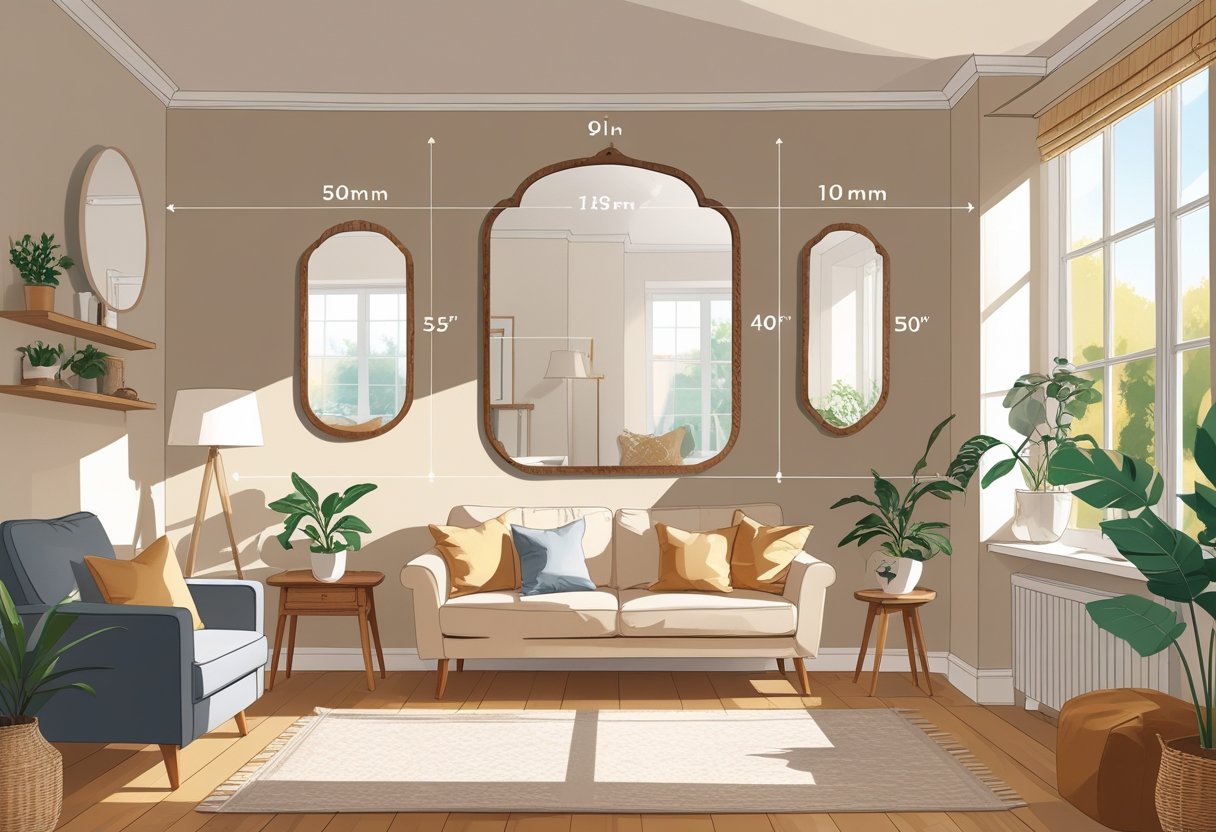
A good rule is to choose a mirror that fills about 60–80% of the available wall space above furniture, or one that sits comfortably within the wall space without crowding it. This guide shows how to measure, match shapes and frames to your style, and avoid common sizing mistakes so you get a mirror that looks right and hangs safely.
Assessing Room Size and Mirror Placement
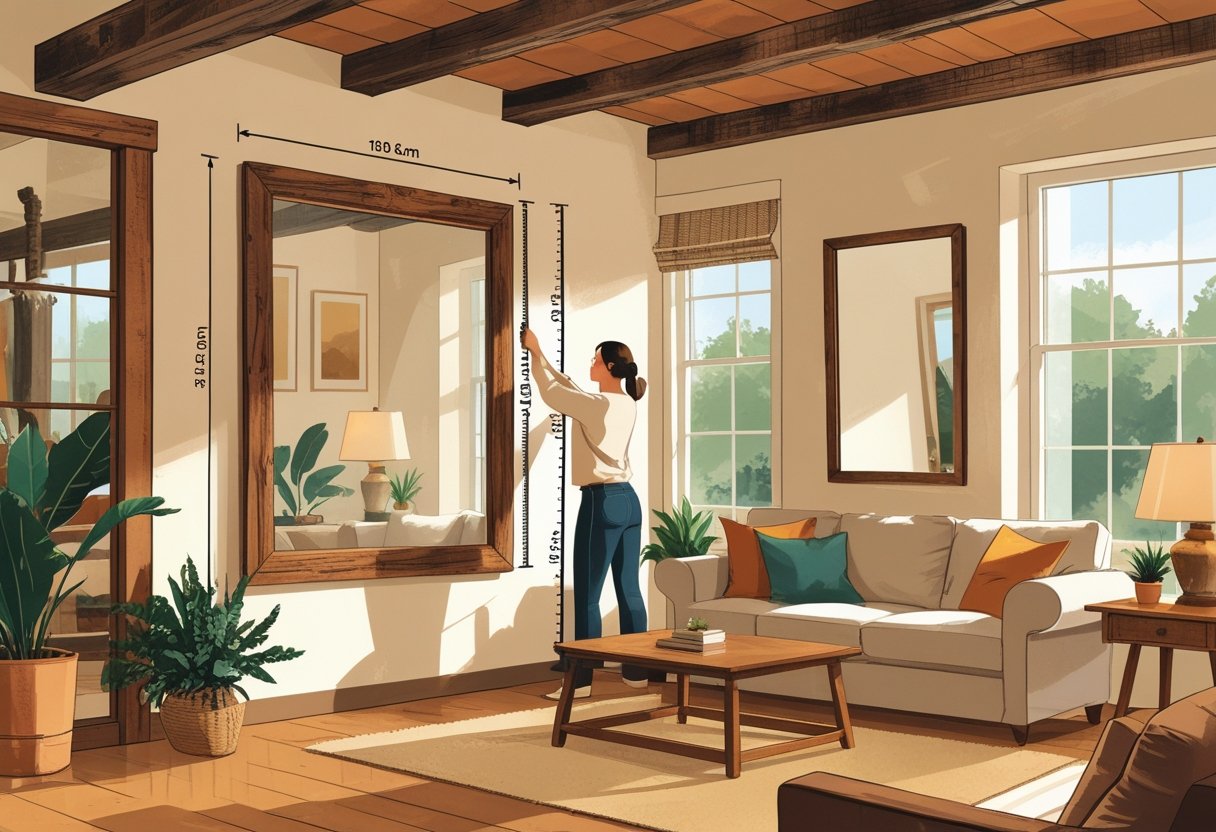
Measure the wall, note ceiling height, and think about how the mirror will sit near furniture and light sources. These facts decide mirror size, shape and exact hanging position to make the room look balanced and bright.
Measuring Your Available Wall Space
Start with a tape measure and mark the wall in centimetres. Measure the full width and height of the wall area you can use, then subtract any skirting boards, picture rails or radiators that limit space.
Decide how much of that area you want the mirror to take. A common rule: a mirror that covers 60–80% of the available wall space works well above furniture such as a console or fireplace. For a standalone wall, aim for 40–70% to avoid overwhelming the room.
Record three measurements: wall width, wall height and clear space between furniture tops and ceiling. Use these when comparing mirror sizes and to check that the frame won’t block switches or sockets.
Considering Ceiling Height and Room Proportions
High ceilings allow taller mirrors or vertical shapes that draw the eye up. In rooms with low ceilings, choose wider, horizontal mirrors to make the ceiling feel higher without crowding the wall.
Match the mirror shape to the room proportions. A long, narrow room suits tall or oval mirrors; a square room suits round or square designs. Keep the mirror’s width in proportion to nearby furniture — for example, a dressing table mirror should be no wider than the table.
Also consider viewing distance. In small rooms, smaller mirrors prevent reflections from feeling cramped. In larger rooms, larger mirrors keep reflections natural and in scale.
Ideal Placement for Visual Impact
Place mirrors to reflect light sources and desirable views, such as windows, artwork or architectural features. Position a mirror opposite or adjacent to a window to increase daylight in the room.
When hanging above furniture, leave a 10–20 cm gap between the top of the furniture and the bottom of the mirror. For wall-mounted mirrors used for checking appearance, hang the centre at about eye level — roughly 150–160 cm from floor for most adults.
Use a spirit level and suitable wall fixings rated for the mirror’s weight. If the mirror is heavy, fix into studs or use wall anchors to keep it secure and straight.
Determining the Best Mirror Size
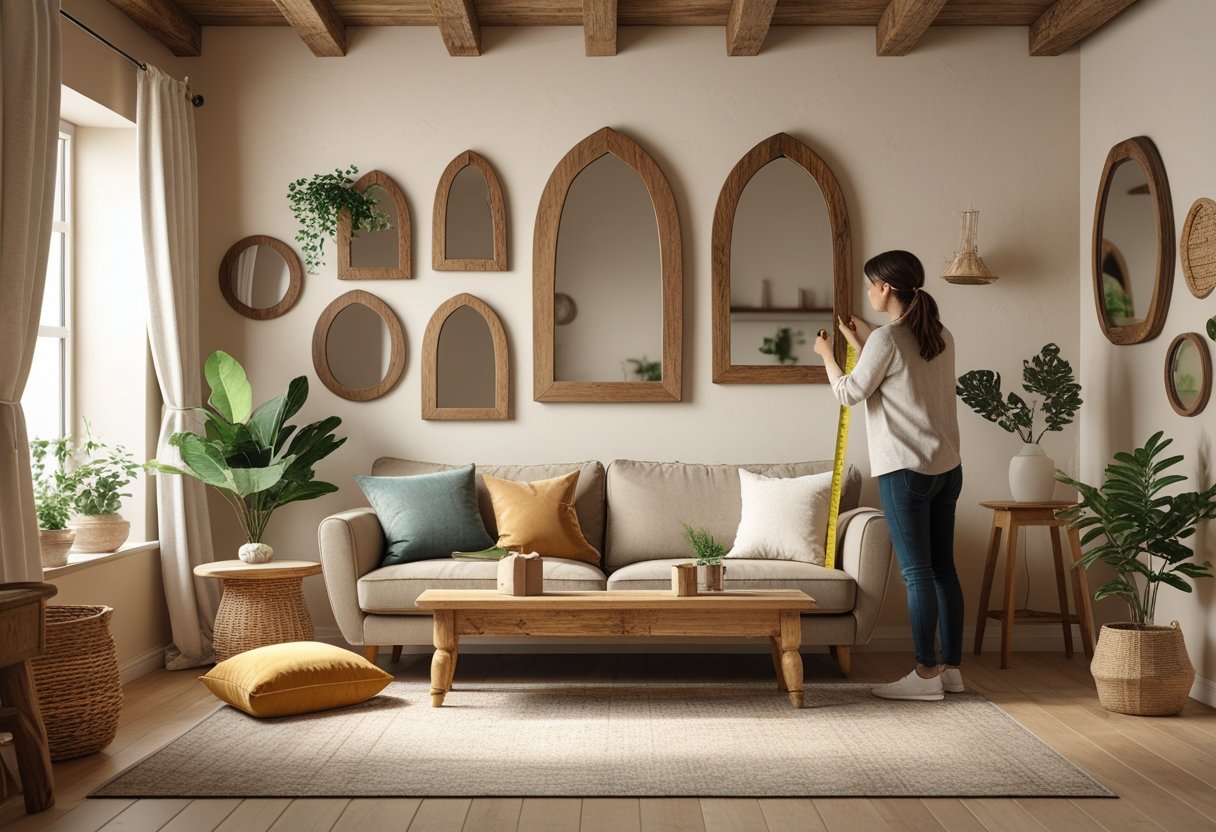
Measure the main furniture and the wall space first. Think about height, width and how the mirror will sit above or beside other items.
Choosing Proportions Relative to Furniture
Match the mirror width to the furniture below it. For a console table or sideboard, choose a mirror about 60–75% of the furniture’s width. For example, a 120 cm sideboard works well with a 72–90 cm mirror.
Leave vertical space between the top of furniture and the mirror. Aim for 8–20 cm gap so the mirror doesn’t look crowded or too high. If you hang the mirror above a fireplace, centre it and keep the bottom edge 5–10 cm above the mantel.
For a bedhead, use a mirror panel or two that runs roughly the same width as the headboard. Smaller mirrors look fine in asymmetrical layouts next to lamps or artwork.
Balancing Mirror Scale With Room Size
In a small room, larger mirrors create the impression of space but position them carefully. One large mirror on a single wall or two medium mirrors grouped together work better than many small mirrors scattered around.
In a large room, use wider or taller mirrors to match the scale. A mirror that is at least 1.2–1.5 m wide can anchor a big wall. Tall mirrors (over 150 cm) suit rooms with high ceilings and help balance vertical proportions.
Consider sight lines and natural light. Place mirrors where they reflect a window or light source to make the room feel brighter, but avoid pointing them directly at doors if privacy is an issue.
Standard Mirror Dimensions for UK Homes
Common rectangular mirror sizes in the UK include:
- 40 x 60 cm — suitable for narrow corridors or small bathrooms.
- 60 x 80 cm — good for over a small sink or side table.
- 80 x 120 cm — fits over standard consoles and medium sideboards.
- 100 x 150 cm and 120 x 180 cm — ideal for full-length uses or large walls.
Round and oval mirrors often come in diameters of 50, 70 and 90 cm. Rustic frames add 5–15 cm to overall size, so include frame width in your measurements. Always measure wall height and furniture width, then subtract about 10–15% to allow breathing room around the mirror.
Style and Function of Rustic Wall Mirrors
Rustic mirrors bring both a look and a job to your room. They should match your colours, materials and the way you use the space.
Blending Rustic Mirrors With Your Décor
Choose a mirror frame that repeats materials already in the room. If you have oak floorboards or a pine table, pick a reclaimed-wood frame with similar grain and tone. For painted skirting or mouldings, pick a frame colour that complements rather than clashes — soft greys, off-whites or muted greens work well.
Match scale to furniture. Place a large rectangular mirror above a long sideboard, or a round mirror above a narrow console. Use odd numbers when grouping smaller mirrors: three is more natural than two. Think about mounting height: centre the mirror at eye level when standing (about 145–155 cm), or 30 cm above taller furniture.
Functional Benefits: Light, Space and Ambience
Mirrors increase natural light by reflecting windows and daylight into darker corners. Position a mirror opposite or adjacent to a window to bounce light across the room. Even small mirrors help brighten narrow hallways and north-facing rooms.
They also create a sense of depth. A mirror across from a seating area can make a small living room feel larger. Use bevelled glass or slightly distressed glass for a soft, aged reflection that suits rustic styles.
Finally, mirrors set mood. Warm-toned frames and low-iron glass give cosy, amber reflections, while darker frames and aged silvering add character. Choose finish and glass type to match the atmosphere you want.
Shape and Frame Considerations
Pick a mirror shape and frame that match your room’s function and the wall space. Think about flow, furniture lines, and how much light you want reflected.
Choosing the Right Shape to Enhance Your Room
Round and oval mirrors soften sharp corners and work well above consoles or sofas. Use a large round mirror (about 100–120 cm diameter) over a low sofa to create a focal point without crowding the wall.
Rectangular mirrors suit tall, narrow walls and can make ceilings look higher when placed vertically. A vertical rectangle of 60–90 cm wide and 120–150 cm high works well beside a fireplace or in a hallway.
Square and abstract shapes suit modern or eclectic rooms. Match the mirror width to furniture width: for example, a dresser mirror should be about two-thirds the dresser’s width.
Consider mirror position too: centre a round mirror above furniture, or stagger a set of small shapes to fill a blank wall without overpowering it.
Frame Width and Material Selection
Choose frame width by wall scale and style. Thin frames (10–20 mm) suit minimalist rooms and small walls; wider frames (40–80 mm) add weight and suit larger feature walls.
For rustic looks, pick reclaimed wood, distressed oak, or metal with patina. Reclaimed wood gives warmth and texture; metal frames with aged finishes add industrial character.
Check frame depth for hanging strength. Deep frames (30–50 mm) often hide fixings and fit heavy glass; slim frames need secure wall anchors.
Match frame colour to nearby finishes: use similar wood tones to your floor or furniture, or a dark metal to echo light fittings.
Practical Tips for Safe Installation
Check the mirror’s weight and your wall type before you buy fixings. Match the fixings to both the mirror and the wall for a secure fit.
Weight Considerations and Wall Types
Know the mirror weight in kilograms. Small rustic mirrors often weigh 3–10 kg; larger framed mirrors can weigh 15–30 kg or more. Measure the weight listed by the seller or weigh the mirror at home using a bathroom scale.
Identify your wall: plasterboard, solid brick, concrete, or stud partition. For plasterboard, use toggle or plasterboard anchors for anything over 5 kg. For solid brick or concrete, use masonry plugs and screws. For stud walls, try to fix at least one screw into a timber stud.
If you cannot reach a stud and the mirror is heavy, use multiple heavy-duty anchors or a mirror hanging rail. Spread fixings across at least two points to reduce stress on any one anchor. Label drill depth to avoid hidden pipes or cables.
Securing Your Rustic Mirror Correctly
Use the correct fixings that match the mirror’s hanging system—D-rings, wire, or cleats. Replace rusty screws and fittings before installation. If the mirror has a hanging wire, never rely on a single small screw; use a proper picture hook rated above the mirror’s weight.
Mark the height and use a spirit level and tape measure for accuracy. Drill pilot holes to make insertion easier and cleaner. Fit rawl plugs fully until flush with the wall and tighten screws until secure but not over-tightened, which can crack plaster or wood.
For very large mirrors, ask a second person to help lift and hold while you secure fixings. Consider professional installation for mirrors over 25 kg or when mounting on delicate or hollow walls.
Common Mistakes To Avoid When Sizing Rustic Mirrors
You might pick a mirror that is too small for the wall and think it saves space. Small mirrors can look lost on a large wall and fail to balance the room.
Avoid choosing a mirror that is too big for the furniture under it. An oversized mirror can overwhelm a console table or fireplace mantel and make the layout feel cramped.
Don’t forget to measure the wall and the mirror frame. Always include the frame width in your measurements so the mirror fits the space as you expect.
Ignoring mounting height is a common error. Mounting too high or too low makes the mirror look awkward and reduces its usefulness. Aim for the middle of the mirror to be at eye level for most users.
Skipping the room’s scale and proportion leads to poor choices. Match mirror size to room size and furniture scale to keep balance and harmony.
Avoid hanging a heavy rustic mirror without proper fixings. Use wall anchors or a timber stud to ensure safety and prevent damage.
Don’t rely only on online photos when judging size. Use a tape measure and paper templates on the wall to visualise the real impact before you buy.
Resist buying a mirror only for style. Consider function, reflection angles and light in the room to ensure the mirror improves both look and use.
Frequently Asked Questions
This section gives clear, practical answers about mirror size, placement, shape and style. You will find exact steps for measuring, hanging and matching a rustic wall mirror to different rooms and furniture.
What factors should be considered when selecting the dimensions of a rustic wall mirror for a particular room?
Measure the wall space first. Note the width and height of the wall and any nearby furniture.
Consider the mirror’s purpose. Use a large mirror for reflecting light and a smaller one for checking appearance.
Think about sight lines and wall features. Leave breathing room around windows, radiators and picture rails.
Can the size of a mirror impact the perception of space in a small room?
Yes. A mirror at least half the width of the wall behind a sofa or bed makes the room feel larger.
Place the mirror to reflect light or a view. Avoid reflecting clutter, which can make the space feel busy.
What are the guidelines for hanging a large rustic mirror in relation to the furniture below it?
Hang the mirror so the bottom edge sits 10–15 cm above the furniture top for most pieces. For low consoles, aim for 12–15 cm; for taller dressers, 10–12 cm works well.
Keep the mirror width around two-thirds to the full width of the furniture. This balances scale without overwhelming the piece.
How does mirror shape contribute to the overall aesthetic and fit in a room's design?
Choose a rectangular mirror for a classic, structured look that suits modern and traditional rooms. An oval or round mirror softens corners and works well above sinks or small tables.
Match the shape to architectural lines. Use round mirrors in rooms with many straight angles to add contrast, or rectangular mirrors to echo long lines.
Are there standard sizes for rustic wall mirrors, and how do I choose the best one for my space?
Common sizes include 60x90 cm, 80x120 cm and 100x150 cm for full-wall or above-furniture use. Smaller sizes like 40x60 cm suit hallways and bathrooms.
Pick a size based on wall measurements and furniture width. Use the two-thirds width rule and check sight lines before buying.
How do I ensure the mirror complements the room's existing style and layout?
Match the frame finish to other metals or woods in the room. If you have reclaimed wood furniture, choose a distressed wood frame in a similar tone.
Consider scale and detail. A chunky frame works in a farmhouse kitchen; a slim frame suits minimalist rooms.