
Bring Warmth and Character to Your Home with Rustic Decor: Inspiring Ideas & Practical Tips
You can make your home feel warm and lived-in without spending a lot. Rustic decor uses natural materials, worn finishes, and simple layers to add comfort and character to any room, whether you live in a cottage or a city apartment. Start with a few key pieces like reclaimed wood, woven textiles, and soft lighting to create an instant cozy vibe.
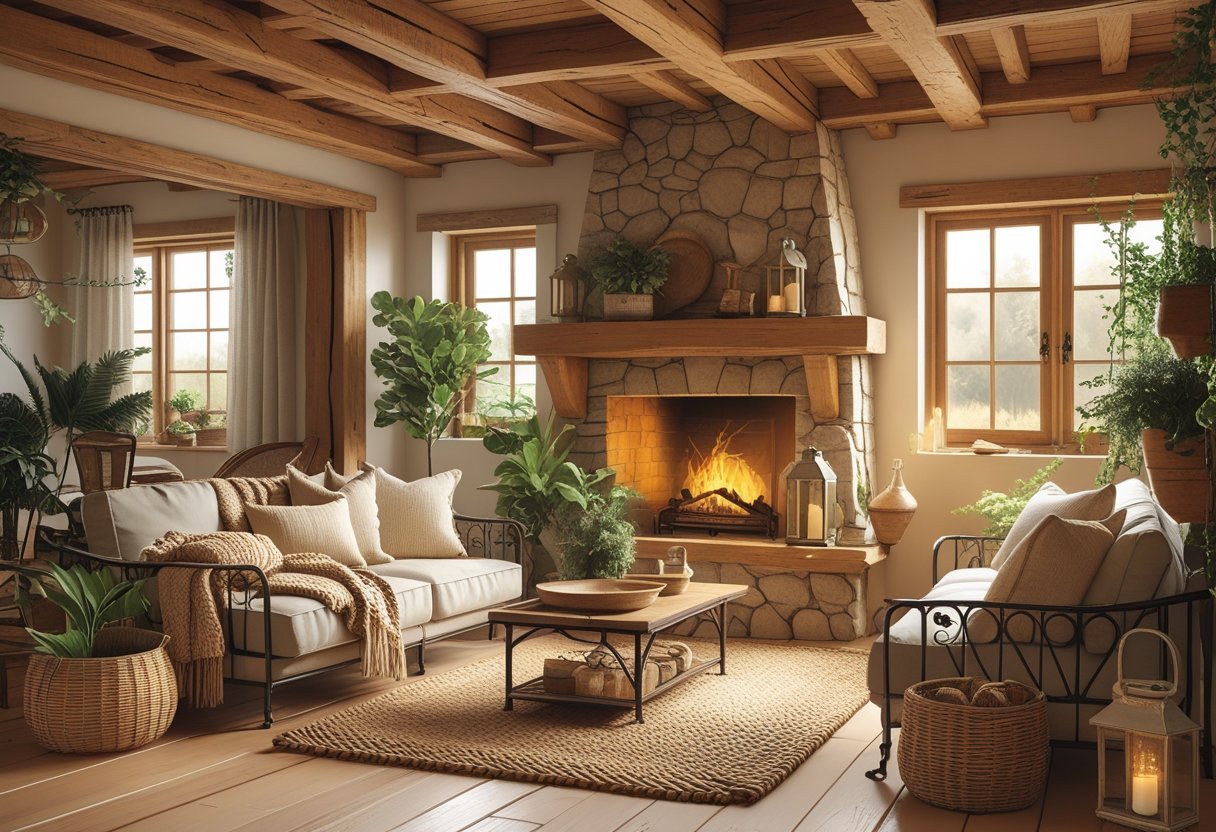
Mix old and new: pair vintage finds with clean lines, add textured rugs and throws, and use metal or stone accents to ground the space. Small changes—open shelving, a distressed table, or mason jar lighting—give big results and let you build the look over time.
Key Takeaways
- Focus on natural materials and simple layers to create warmth.
- Combine vintage pieces with modern touches for balanced character.
- Use lighting and textiles to quickly boost comfort and style.
Understanding Rustic Decor’s Warmth and Character
Rustic decor centers on natural materials, lived-in textures, and practical furniture that feels welcoming. Expect warm wood tones, simple lines, and pieces that show age or handcrafting.
Defining Rustic Charm and Elegance
Rustic charm mixes rough textures with thoughtful design. You’ll see reclaimed wood, visible grain, and distressed finishes paired with clean silhouettes. That mix creates a quiet elegance—nothing flashy, but carefully chosen.
In a farmhouse style room, a large wooden table with turned legs can sit beside a streamlined sofa. The contrast keeps the space cozy yet refined. Small details—wrought-iron hardware, hand-thrown pottery, or a linen throw—add character without clutter.
Think of rustic elegance as intentional imperfection. You keep function first: sturdy furniture, durable textiles, and lighting that reads well at night. Those choices give your home both warmth and a composed, lived-in look.
Key Elements of Rustic Interior Design
Wood dominates: floors, beams, panelling, or furniture in oak, pine, or reclaimed planks set the base. Choose finishes that show knots or wear for authenticity. Stone or brick accents—fireplaces or backsplashes—add texture and thermal mass.
Textiles matter. Wool rugs, linen curtains, and cotton cushions soften hard surfaces and add layered comfort. Use earth tones—browns, warm greys, olive, and cream—to unify the palette. Metal finishes like aged bronze or black iron add contrast and tie rustic and modern pieces together.
Furniture should be practical and well-built. A farmhouse table, leather armchair, or open shelving gives function and style. Mix in a few modern-rustic pieces—clean-lined sofas or simple pendant lights—to keep the room current.
How Rustic Decor Influences Atmosphere
Rustic design makes spaces feel calm and grounded. Natural materials absorb and reflect light in warm ways, so rooms feel cozy without heavy decoration. The tactile surfaces invite touch and create a sense of comfort.
You control the mood through scale and texture. Large wooden elements bring solidity; layered textiles and warm bulbs add softness. Combining rustic with modern elements—like a sleek sofa against a panelling wall—keeps the room from feeling old-fashioned.
Your home will feel lived-in and personal when you include handcrafted items, family heirlooms, or vintage finds. Those touches tell a story and make the space uniquely yours, while the overall rustic framework keeps it cohesive and welcoming.
Foundational Materials and Textures for Rustic Spaces
Choose materials that show age, grain, and tactile texture. Use wood, stone, brick, and woven fibers to create warmth, depth, and a lived-in feel that works room to room.
Embracing Reclaimed Wood and Natural Wood
Reclaimed wood brings character through knots, nail holes, and varied patina. Install a reclaimed wood accent wall to anchor a living room or create reclaimed wood shelves for open storage. Match finishes: matte oils and beeswax keep the surface natural and durable.
Use local species when possible—oak, pine, and elm show strong grain and patina. For furniture, pick solid boards rather than thin veneers to avoid peeling. Natural wood flooring or wooden ceiling beams add visual warmth; stagger plank widths for an authentic look.
Keep maintenance simple. Wipe spills, reapply oil every few years, and sand only when necessary to preserve the aged surface. Combine with metal or glass accents for contrast without losing rustic appeal.
Stone Accents and Fireplace Surrounds
Stone anchors a room visually and thermally. A stone fireplace surround creates a focal point; choose stacked fieldstone, honed limestone, or tumbled slate depending on color and texture you want. Use larger stones on the hearth and smaller, tighter coursing above the mantle for balance.
Stone walls or partial stone cladding work well behind stoves, entryways, or staircases. Seal porous stone to reduce staining but keep a matte finish so the surface reads natural. For safety, ensure proper hearth dimensions and a non-combustible backer behind wood finishes near the firebox.
Mix stone with reclaimed wood mantelpieces or shelves for layered texture. Accent with metal tools, ceramic pottery, or a woven basket for kindling to keep function and style aligned.
Incorporating Exposed Beams and Brick Walls
Exposed wooden beams add structure and history to a room. Install or reveal wooden ceiling beams to raise visual interest; leave beams raw or lightly stained to highlight grain. For authenticity, use full-size beams or realistic reclaimed-beam cladding rather than thin faux trim.
Exposed brick walls bring warmth through color and irregularity. Point brick in warm mortar tones and leave it unpainted for a more rustic feel. In kitchens, a partial brick backsplash behind open shelving creates a textured backdrop for jars and ceramics.
Use beams and brick with clearances in mind—make sure beams don’t block sightlines or lighting. Combine with recessed lights or uplights to highlight texture without washing it out.
Woven Materials and Natural Textiles
Textiles soften hard surfaces and add tactile contrast. Choose handwoven rugs, wool rugs, or sisal and jute area rugs for high-traffic areas. Place a wool rug under a seating area for warmth and a sisal or jute rug in entryways for durability and texture.
Use linen curtains to filter light and keep a natural drape. Add woven baskets and wicker baskets for storage; they pair well with reclaimed wood shelves and stone hearths. Consider woven wall hangings or a burlap table runner to introduce craft and pattern without heavy color.
Layer textiles: start with a neutral jute rug, add a smaller patterned wool rug, and top with handwoven cushions. Rotate and air natural textiles regularly to prevent wear and keep fibers fresh.
Color Schemes and Rustic Decor Palettes
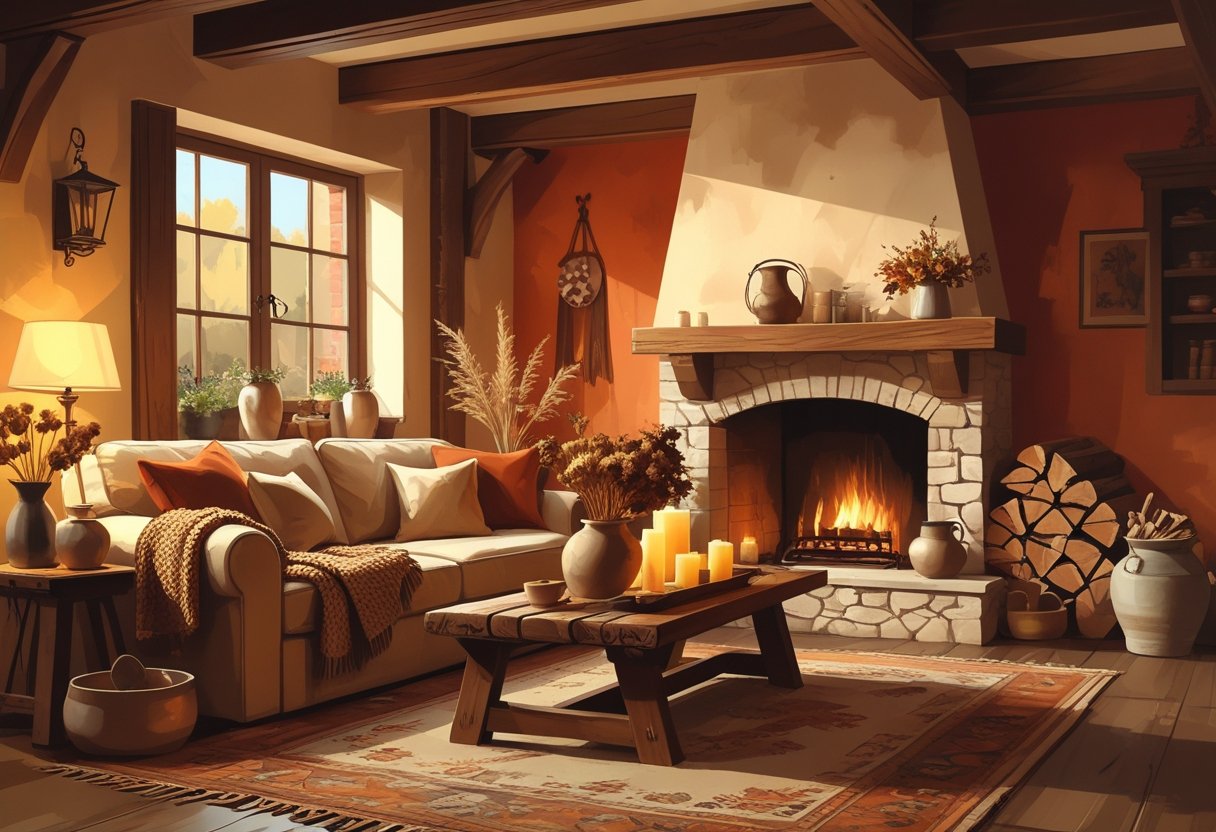
Rustic palettes rely on grounded, natural hues and simple neutral layers to make rooms feel warm and lived-in. Pick a dominant earthy color, then add two supporting neutrals and one accent to keep the room balanced and intentional.
Earthy Tones and Warm Neutrals
Choose earthy tones like terracotta, olive, walnut brown, and deep forest green as your base. These colors connect to wood, clay, and foliage and work well on walls, large furniture, or kitchen cabinets. Use rich rust or burnt orange for smaller elements—pillows, a rug, or a single accent wall—to add warmth without overwhelming the room.
Pair those earthy colors with warm neutrals such as cream, beige, oatmeal, and wheat yellow. Warm neutrals soften the palette and keep light levels high. For example, paint walls in a soft cream, use a walnut-brown sofa, and add terracotta cushions. That mix keeps the space cozy while letting texture—linen, woven baskets, reclaimed wood—do much of the visual work.
Layering with Neutral Color Palettes
Start a neutral color palette with a main tone like taupe, dove gray, or sand brown. Layer lighter and darker neutrals to create depth: a pale ivory ceiling, mid-tone taupe walls, and charcoal or espresso trim or furniture. This creates a calm, cohesive backdrop that highlights rustic materials.
Add subtle contrasts through finishes and accents. Matte plaster, hammered metal, and distressed wood read differently even when close in color. Use a single brighter neutral—amber yellow or sunflower for small decor—to bring energy. Keep patterns minimal and textures varied so the neutral palette stays warm and interesting without cluttering the room.
Signature Rustic Decor Ideas for Key Living Spaces
Use natural materials, warm tones, and purposeful storage to make each room feel lived-in and functional. Focus on a few strong pieces—like reclaimed wood shelving or a farmhouse table—and layer textures with textiles and vintage finds.
Rustic Living Room Inspiration
Anchor the room with a cozy fireplace and a wide wooden mantel made from reclaimed beams. Place a comfortable vintage leather armchair or a slipcovered sofa near the hearth to create a reading nook.
Add reclaimed wood shelving or a ladder-style blanket rack for throws and books. These keep items handy and add vertical interest on empty walls.
Use a mix of textures: woven rugs, knit poufs, and linen curtains. Choose warm, earthy colors and keep most patterns simple. Finish with small accents like iron candle holders or a pallet wood wall art piece to add character without clutter.
Rustic Dining Room and Kitchen Details
Start with a solid farmhouse dining table or farmhouse table—preferably with a visible wood grain or distressed finish. Pair it with mixed chairs or a bench for a casual, practical look.
In the kitchen, choose a farmhouse sink and butcher block countertops for a hands-on, warm surface. Install open shelving or reclaimed wood shelving to display dishes, jars, and copper pots.
Consider a sliding barn door between the kitchen and dining area to save space and add rustic style. Use hammered metal or stoneware dinnerware and a simple centerpiece like a wooden bowl or galvanized tub with fresh herbs.
Cozy Bedroom Retreats
Place a low, wooden bed frame or an iron bed against a textured wall and add layered bedding: cotton sheets, a quilt, and a chunky knit throw. Keep bedside tables simple—reclaimed wood works well—and add soft lighting with handcrafted lamps.
Create a small cozy nook with a window seat or distressed leather chair and a stack of quilts. Use floating reclaimed wood shelves for books and plants. Close sliding barn doors on a walk-in closet to keep the room calm and uncluttered.
Choose muted tones and natural fibers to promote rest while keeping the rustic charm intact.
Vintage Finds, Handcrafted Details, and Accents
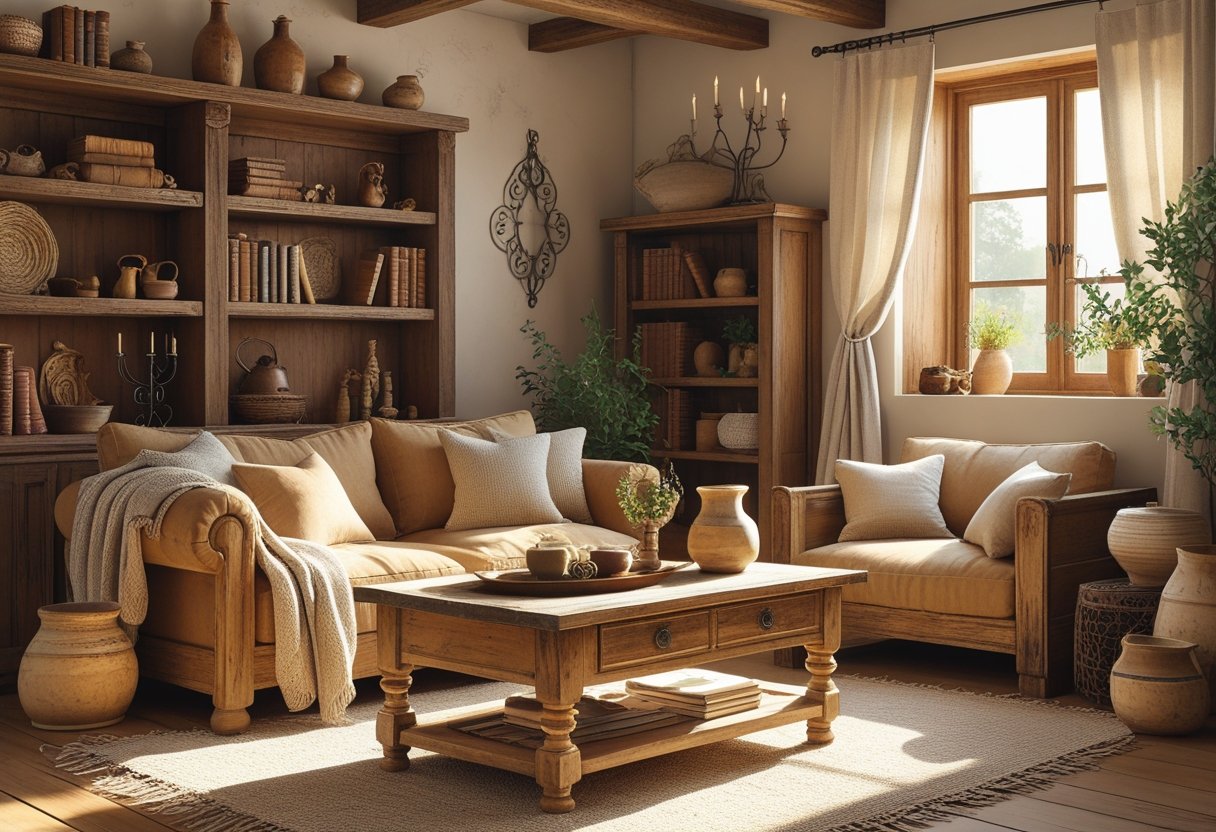
You can layer vintage pieces and handmade items to give rooms depth and personality. Focus on one or two standout pieces, mix in smaller handcrafted accents, and keep colors and textures tied to your room’s palette.
Sourcing Unique Vintage Pieces
Look for a strong focal piece first: a vintage mirror with a carved wood frame, an oversized wall clock, or a farmhouse table. Check thrift stores, estate sales, and online marketplaces like Facebook Marketplace or Etsy. Inspect items for solid construction—tight joints on furniture, glass without crazing, and hardware you can salvage.
Bring small vintage accents such as dishware, metal signs, or rustic pottery to test the mix. Photograph items in your space before you buy to ensure scale and color fit. For fragile finds like antique ceramics, ask about provenance and return policies.
Adding Handcrafted Furniture and Decorative Accents
Choose handcrafted furniture with visible joinery or hand-planed surfaces to add honest texture. A reclaimed-wood bench or a hand-carved side table works well next to smoother modern pieces. For decor, add rustic wall art, pottery, and woven baskets made by local artisans.
Use textiles—wool throws, linen cushions—to soften hard edges. Mix metalwork like black iron lamps or galvanized trays with wooden accents for contrast. Small handcrafted items, such as a turned-wood bowl or hand-thrown vase, bring warmth without crowding the room.
Blending Modern Rustic with Antique Charm
Anchor modern rooms with one or two antique pieces to avoid a dated look. Pair a sleek sofa with a distressed leather chair or a vintage rug under a minimalist coffee table. Keep finishes consistent: if you use warm woods, pick metal accents in matte black or aged brass.
Group items by color or material to make a cohesive vignette—stack vintage dishware, a small rustic planter, and a framed botanical print on open shelving. Use scale to balance pieces: one large vintage furniture item plus several small handcrafted accents reads intentional, not cluttered.
Lighting and Ambiance in Rustic Interiors
Good lighting makes wood tones, worn metals, and textured fabrics feel cozy and lived-in. Focus on warm color temperature, layered light, and fixtures that match your materials and scale.
Soft Lighting for Warmth
Aim for bulbs around 2200–2700K to keep light warm and amber. Use dimmers on main lights so you can lower brightness for evenings. Place table lamps and wall sconces where you read or relax to avoid harsh overhead light.
Choose lampshades of linen, burlap, or frosted glass to diffuse light softly. Cluster lights at different heights: a floor lamp beside a chair, a table lamp on a sideboard, and sconces along a hallway. This layered approach removes shadows and highlights wood grain and textiles.
For outdoor and porch areas, use string lights or lanterns with warm LEDs. These give a steady, gentle glow that complements rustic exteriors like stone, brick, and reclaimed wood.
Rustic Chandeliers, Pendant Lights, and Mason Jar Lighting
Pick a chandelier that matches your room size and ceiling height. A large antler or wagon-wheel style works in high-ceiling dining rooms; smaller wrought-iron or wooden chandeliers fit cozier spaces. Secure heavy fixtures with proper anchors and check weight limits.
Pendant lights work well over islands and tables. Use three pendants spaced evenly over an island, each 10–12 inches apart for a small island, wider for larger ones. Metal finishes like aged brass, black iron, or distressed copper pair well with reclaimed wood.
Mason jar lighting gives a handcrafted look. Use clear or lightly tinted jars with LED filament bulbs for warmth and safety. Cluster jars in groups or line them over a counter. Seal jars and wire safely, keeping wiring hidden inside vintage conduit or wrapped rope for a rustic feel.
Incorporating Edison Bulbs and Industrial Fixtures
Edison bulbs add visible filaments and amber glow, so use them where the bulb is part of the design. Choose lower-lumen filament-style LEDs to mimic the look without high heat or energy use. Place them in open fixtures, pendants, and sconces where you want the vintage look to show.
Industrial lighting—metal shades, exposed hardware, and conduit—works well with concrete, metal, and dark woods. Mount adjustable task lights over workbenches or reading nooks. Pair industrial pieces with softer elements, like woven rugs or wood beams, to keep the room balanced.
When mixing styles, keep finish tones consistent. If you use black iron in one fixture, echo it in smaller accents like cabinet pulls or shelf brackets to tie the look together.
Textiles, Rugs, and Cozy Layers
Choose textiles that add warmth, texture, and easy care. Pick a mix of natural fibers and durable synthetics so you can layer throws and rugs, add pillows, and bring rustic character without extra work.
Layered Textiles and Cozy Throws
Layer throws in different weights and textures to match seasons and use. Drape a chunky wool or cable-knit throw over the arm of a sofa for winter warmth. Add a lightweight linen or cotton throw for summer that still looks layered but breathes.
Use faux fur throws or a small sheepskin rug on a chair for a soft touch that hides wear and is easy to clean. Roll several throws into a woven basket for quick access and a tidy display. Rotate throws by season and location so heavier pieces wear less.
Mix textures—smooth linen, nubby wool, and plush faux fur—so each seat invites touch. Keep one hard-working throw with stain-resistant fabric near high-traffic spots.
Rug Choices: Cowhide, Wool, Jute, and Sisal
Choose a rug by room use: wool rugs for living rooms and bedrooms for warmth and sound absorption. Wool resists crushing and keeps its shape under furniture.
Use cowhide rugs to add rustic pattern and durability under coffee tables or in entryways. They layer well over larger woven rugs and hide dirt in high-traffic zones.
Choose jute rugs or sisal rugs for dining areas and hallways where you need low pile and easy vacuuming. Jute adds organic texture; sisal offers firm, tight weave that wears well.
Consider handwoven rugs for unique character. Always use a rug pad to prevent slipping and extend life. Layer a smaller patterned woven rug on top of a larger neutral base for depth.
Decorative Pillows and Soft Touches
Pick pillows that mix scale, texture, and shape. Combine two large neutral squares with one smaller patterned pillow for balance. Include a lumbar or round pillow for variety.
Choose fills that keep shape—down alternatives for allergy-safe plumpness. Use removable covers so you can wash or swap seasonally. Look for materials like woven wool, handwoven fabrics, and embroidered linen to add craft details.
Add small soft touches: a sheepskin draped over a bench, a few faux fur accents, and woven baskets to store extra pillows and throws. Baskets add texture and keep clutter out of sight while staying on-theme.
Functional Storage and Display Solutions
Rustic storage mixes usefulness with visible texture. Choose pieces that hold items you use daily and add natural, worn wood or woven fibers for instant character.
Woven and Wooden Basket Storage
Woven baskets and wicker baskets store blankets, toys, and laundry where you can reach them. Pick sizes that fit under benches, beside sofas, or on closet shelves to avoid wasted space.
Use baskets with lids for dust-prone items and open styles for things you grab often. Label the baskets with small wooden tags or chalkboard clips so you find items fast. Natural tones like jute, seagrass, or rattan match most rustic palettes and hide wear well.
Place a shallow basket on an entry table for keys and mail. Stack two to three baskets on a shelf for seasonal gear. Choose sturdy handles and tight weaving when you plan to move baskets frequently.
Open Shelving and Reclaimed Wood Shelves
Open shelving shows items you want visible and keeps counters clear. Install floating shelves in kitchens for dishes, mason jars, and spices, or in living rooms for books and framed photos.
Reclaimed wood shelves bring a weathered look and often hide dings and stains. Secure shelves with metal brackets or hidden supports rated for the weight you expect. Measure before mounting: thicker boards hold more weight and wider brackets reduce sag.
Use a mix of vertical and horizontal storage on shelves. Group similar items, leave breathing room, and place heavier pieces low. Add small baskets or boxes on open shelving to hide clutter while keeping the rustic feel.
Creative Storage with Wooden Crates
Wooden crates work as stackable drawers, wall displays, or mobile storage on casters. Arrange crates horizontally for cubby-style shelving or vertically as a slim bookcase for tight spaces.
Customize crates with stain, paint, or burned labels to match your decor. Use galvanized bins inside crates for wet or muddy items like boots and umbrellas. Secure stacked crates with L-brackets to prevent tipping.
For playrooms, mount crates low on the wall so kids can reach toys. In kitchens, convert a crate into a spice rack by adding small dividers. The modular nature of reclaimed wood shelving and crates makes it easy to change layouts as your needs evolve.
Accessorizing Your Rustic Home: Final Touches
Focus on pieces that add texture, color, and purpose. Pick wall art and botanicals that echo your wood tones, choose plants that suit light levels, and use metal accents in copper and black to bring contrast and function.
Rustic Wall Art and Botanical Prints
Choose art that feels aged or handmade. Look for wooden frames, distressed finishes, or reclaimed wood panels to hang prints. Botanical prints work well in muted colors—pressed‑flower frames, vintage herb diagrams, or linen‑mounted illustrations bring nature inside without bright, glossy tones.
Group small pieces into a gallery wall above a sofa or mantle. Keep spacing even and use similar frames or a consistent mat color to tie the display together. For large walls, a single carved wooden panel or an oversized metal sign adds strong rustic character.
Display options:
- Lean framed botanical prints on open shelving.
- Mount a weathered wooden panel above a bed.
- Use a narrow picture rail to swap prints seasonally.
Greenery and Indoor Plants
Pick plants that match your home’s light and humidity. Snake plants, pothos, and ZZ plants tolerate low light and need little care. For brighter rooms, choose fiddle‑leaf figs, rubber plants, or olive trees in large clay or woven baskets.
Use rustic containers like terracotta pots, galvanized buckets, or woven seagrass planters. Group plants at varied heights—stand a tall plant next to a wrought iron bed frame or place small succulents on reclaimed wood shelves. Dried botanicals, such as eucalyptus or lavender, work well in simple vases where live plants won’t thrive.
Care tips:
- Rotate plants toward light every few weeks.
- Use saucers under copper pots to prevent staining.
- Repot when roots circle the container.
Kitchen Accents: Copper, Iron, and More
Add copper pots and pans where you can see them. Hang a set on a rail or display them on open wooden shelves. Copper warms the space and pairs well with cream or sage paint. Use copper bowls and utensils for serving to keep the look cohesive.
Wrought iron hardware suits rustic cabinets, barn doors, and light fixtures. Choose drawer pulls and hinges with hand‑forged looks to match an iron bed frame or exposed ceiling hooks. Mix in ceramic crocks and wooden cutting boards for texture and function.
Practical tips:
- Season new copper cookware before use and clean with mild vinegar solutions.
- Install robust wall anchors for heavy hanging pots.
- Keep frequently used items within easy reach on open shelving.
Mixing Metals and Black Metal Accents
Balance warmth and edge by mixing copper, iron, and black metal accents. Let copper and brass act as focal points while using black metal for structure—picture frames, lamp bases, or bed frames. A wrought iron bed frame grounds a bedroom; add black metal bedside lamps for a modern rustic contrast.
Keep finishes consistent in each area. If you use black metal window frames, repeat that metal in curtain rods or shelving brackets. Avoid overloading one surface with many different metals; instead, repeat one or two finishes to create unity.
Placement ideas:
- Pair a black metal chandelier with copper candleholders on the dining table.
- Use black metal shelving brackets with wooden shelves to echo iron bed frame lines.
- Accent a fireplace mantel with a mix of small copper vessels and a large black metal mirror.
Frequently Asked Questions
You can add warm wood, layered textiles, and vintage accents to make rooms feel cozy and lived-in. Focus on a few key pieces, natural materials, and warm lighting to create a balanced rustic look.
How can I effectively incorporate rustic elements into a modern living space?
Start with one focal rustic piece, like a reclaimed wood coffee table or a shiplap accent wall. Keep the rest of the room simple with clean-lined furniture so the rustic item stands out without cluttering the space.
Add small rustic touches—woven baskets, a leather chair, or metal light fixtures—to repeat the theme. Use limited colors and a few textures so the room feels cohesive and modern.
What are essential pieces to achieve a rustic decor theme in a home?
A solid wood table or bench anchors a room with rustic character. Layer in a wool rug, chunky knit throw, and a leather or worn fabric armchair for comfort.
Include a few vintage or handcrafted items like a metal lantern, ceramic vase, or antique mirror to add authenticity. Reclaimed wood shelving or exposed beams also help define the style.
What materials are commonly used in rustic home decor?
Wood shows natural grain and wear and is the most common material for furniture and paneling. Stone or brick works well for fireplaces, floors, or accent walls.
Woven fibers like jute, rattan, and wool bring texture, while aged metals—iron or brass—add utilitarian detail. Linen and cotton fabrics keep textiles soft and breathable.
How can lighting contribute to the ambiance of rustic home decor?
Choose warm, low-color-temperature bulbs to create a golden glow that feels cozy. Use layered lighting: pendant or chandelier for general light, table lamps for spots, and candles or lanterns for mood.
Select fixtures with wood, iron, or aged finishes to match the rustic palette. Dimmable switches help you control the level of warmth throughout the day.
Where can I find authentic rustic decor pieces for my home?
Look at local flea markets, antique shops, and estate sales for unique, aged items. Thrift stores and salvage yards can yield reclaimed wood, old doors, and metal hardware at low cost.
Handmade markets and small craft shops sell pottery, woven baskets, and textiles with a personal touch. For convenient options, search specialty online shops that focus on reclaimed or vintage goods.
What color schemes work best with rustic interior design?
Stick to earthy tones: creamy whites, taupe, terracotta, olive green, and deep browns for a grounded look. Use neutral walls as a backdrop and add darker wood or metal accents for contrast.
Introduce small color pops through pillows, plants, or artwork to keep rooms from feeling flat. Maintain a warm, muted palette rather than bright, saturated colors.